
Quick Answer
A blood pressure reading has two numbers:
- The top number (systolic) shows the pressure when your heart beats
- The bottom number (diastolic) shows the pressure when your heart rests between beats
Together, they show how hard your blood is pushing against your artery walls.
What the Two Numbers Mean
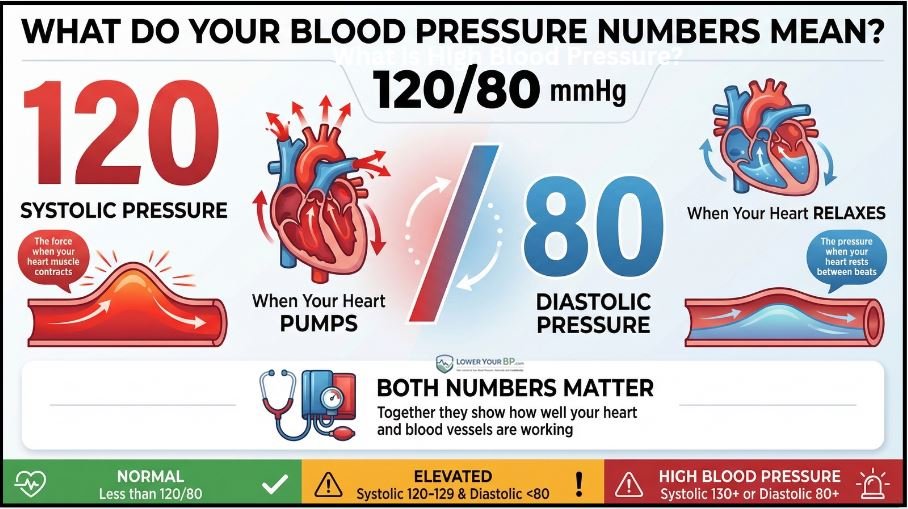
A typical reading looks like this:
120/80 mmHg
- 120 (systolic): pressure when your heart pumps
- 80 (diastolic): pressure when your heart relaxes
Both numbers matter because they reflect different parts of how your heart and blood vessels are working.
👉 Learn more:
What Is a Normal Blood Pressure Reading?
Here’s a simple breakdown:
- Normal: Less than 120/80
- Elevated: 120–129 / less than 80
- High (Stage 1): 130–139 / 80–89
- High (Stage 2): 140+ / 90+
These ranges help doctors decide whether you need lifestyle changes, monitoring, or treatment.
👉 Learn more:
- What Is Considered High Blood Pressure?
Which Number Is More Important?
Both numbers matter.
- The top number (systolic) is often more important for adults over 50
- The bottom number (diastolic) can be more important in younger adults
Doctors always look at both together to understand your overall risk.
👉 Learn more:
- Which Blood Pressure Number Matters More?
Why Blood Pressure Numbers Change
Your blood pressure is not fixed – it changes throughout the day.
Common causes of changes include:
- Stress
- Physical activity
- Caffeine
- Time of day
- Sleep quality
This is why one reading doesn’t tell the full story.
👉 Learn more:
- Why Does Blood Pressure Change Throughout the Day?
When Blood Pressure Is Dangerous
Very high readings can be serious.
- 180/120 or higher may be a medical emergency
- If this happens, you should seek medical care right away
👉 Learn more:
- When Is Blood Pressure Dangerous?
- What Is a Hypertensive Crisis?
How to Keep Track of Your Numbers
Tracking your blood pressure at home helps you understand patterns over time.
Simple tips:
- Measure at the same time each day
- Sit quietly before checking
- Keep a record of your readings
👉 Learn more:
- How to Check Blood Pressure at Home
Learn More From Trusted Sources
For more detailed medical information, you can visit:
- American Heart Association
- CDC
- Mayo Clinic
These organizations provide up-to-date, evidence-based guidance on blood pressure and heart health.
The Bottom Line
Blood pressure numbers show how hard your blood is pushing through your arteries when your heart beats and when it rests.
Understanding these numbers helps you:
- Spot problems early
- Track your health
- Take steps to protect your heart