
Quick Answer
Diastolic blood pressure is the bottom number in a blood pressure reading. It measures the pressure in your arteries when your heart is resting between beats.
For example, in a reading of 120/80, the number 80 is your diastolic pressure.
To understand how this fits into the full reading, see What Do Blood Pressure Numbers Mean.
What Diastolic Blood Pressure Measures
Your heart does not pump continuously. It works in a cycle:
- It contracts to push blood out
- It relaxes to refill with blood
Diastolic pressure measures what is happening during the resting phase.
Even when your heart is not actively pumping, your blood is still moving through your body. Your arteries maintain a certain level of pressure to keep blood flowing to your organs.
Diastolic pressure shows how much resistance your blood vessels are creating during this resting phase.
What Is a Normal Diastolic Blood Pressure?
In general:
- Normal diastolic pressure is below 80 mmHg
Here is a simple guide:
- Below 80 is considered normal
- 80 to 89 may indicate early high blood pressure
- 90 or higher is considered high
Doctors look at both the top and bottom numbers together, not just one on its own.
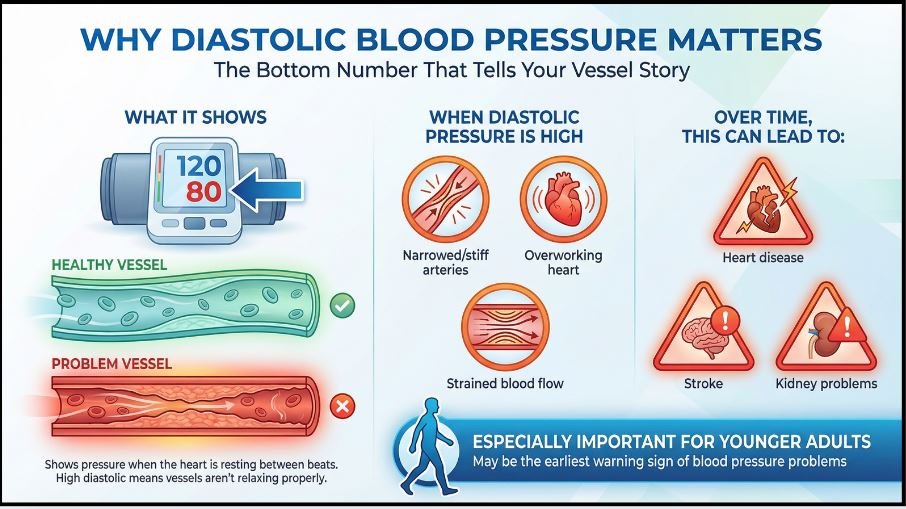
Why Diastolic Blood Pressure Matters
Diastolic pressure gives insight into how relaxed or tight your blood vessels are.
When diastolic pressure is high, it may mean:
- Your arteries are narrowed or stiff
- Your heart is working harder than it should
- Blood flow is under constant strain
Over time, this can increase the risk of:
- Heart disease
- Stroke
- Kidney problems
In younger adults, diastolic pressure can be especially important. It may be one of the earliest signs that blood pressure is becoming a problem.
What Causes High Diastolic Blood Pressure?
Several everyday factors can raise diastolic pressure, including:
- Stress and anxiety
- Lack of sleep
- High salt intake
- Being overweight
- Lack of physical activity
- Smoking or excessive alcohol use
Sometimes, high diastolic pressure develops gradually without obvious symptoms.
Can Diastolic Blood Pressure Be Too Low?
Yes, diastolic pressure can also be too low.
A reading below about 60 mmHg may cause:
- Dizziness
- Fatigue
- Reduced blood flow to the heart
Very low diastolic pressure can be a concern because the heart itself relies on blood flow during its resting phase.
How to Keep Diastolic Blood Pressure in a Healthy Range
Simple habits can help support healthy blood pressure:
- Reduce sodium intake
- Stay physically active
- Maintain a healthy weight
- Manage stress
- Get consistent sleep
- Follow your doctor’s advice if you are on medication
Small changes can make a meaningful difference over time.
When to Talk to a Doctor
You should speak with a healthcare provider if:
- Your diastolic number is consistently 80 or higher
- Your readings are increasing over time
- You experience symptoms like dizziness or chest discomfort
If your blood pressure reaches 180/120 or higher, seek medical care immediately.
The Bottom Line
Diastolic blood pressure is the bottom number in your reading and reflects the pressure in your arteries when your heart is at rest.
It plays an important role in your overall heart health and should not be ignored. Tracking your numbers and understanding what they mean is one of the simplest ways to take control of your health.