
Quick Answer
Systolic blood pressure is the top number in a blood pressure reading. It shows how much pressure your blood puts on your artery walls when your heart beats and pushes blood out.
For example, in a reading of 120/80, the number 120 is your systolic pressure.
If you are unsure how both numbers work together, you can read more in What Do Blood Pressure Numbers Mean.
What Systolic Blood Pressure Measures
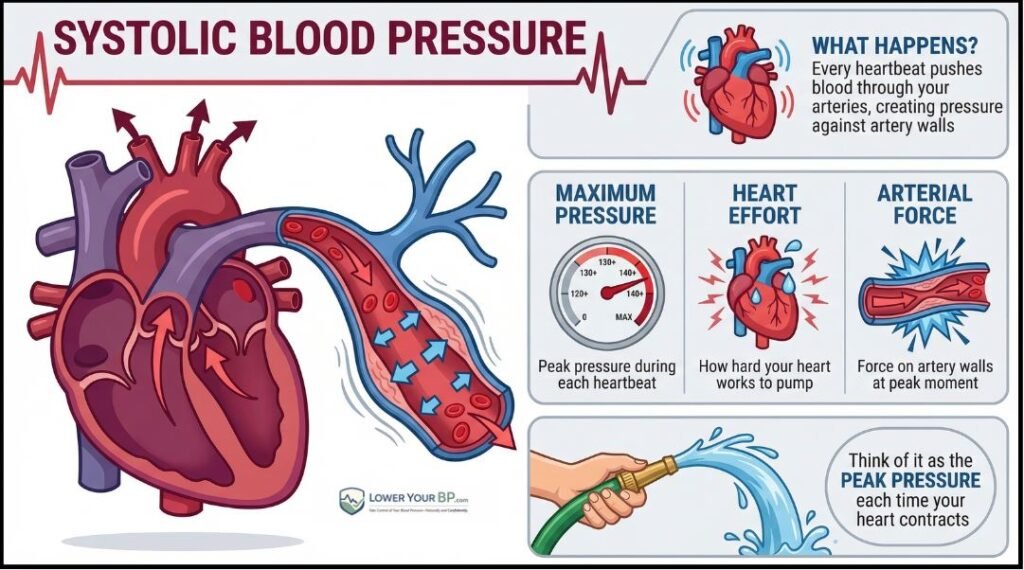
Every time your heart beats, it pushes blood through your arteries to the rest of your body. This creates pressure against the artery walls.
Systolic blood pressure measures:
- The maximum pressure during a heartbeat
- How hard your heart is working to pump blood
- How much force your arteries are under at that moment
Think of it as the peak pressure in your system each time your heart contracts.
What Is a Normal Systolic Blood Pressure?
For most adults:
- Normal: Less than 120
- Elevated: 120 to 129
- High (Stage 1): 130 to 139
- High (Stage 2): 140 or higher
Doctors use these ranges to determine whether your blood pressure is healthy or needs attention.
Even a small increase over time can raise your risk of heart problems, so it is important to track your numbers regularly.
Why Systolic Blood Pressure Matters
Systolic pressure is often the most important number when it comes to long-term health risk.
Higher systolic pressure can:
- Put extra strain on your heart
- Damage artery walls
- Increase the risk of heart disease and stroke
As people get older, systolic pressure tends to rise because arteries become less flexible. This makes it especially important to monitor.
Why Systolic Pressure Increases
Several common factors can raise systolic blood pressure:
- Stress or anxiety
- High sodium intake
- Lack of physical activity
- Excess body weight
- Caffeine or alcohol
- Poor sleep
Some increases are temporary, while others can become long-term if not addressed.
When Systolic Blood Pressure Is Too High
A systolic reading of 130 or higher may indicate high blood pressure.
A reading of 180 or higher is considered very dangerous and may require immediate medical attention, especially if you have symptoms like chest pain or shortness of breath.
If you are unsure how serious your reading is, you should review What Do Blood Pressure Numbers Mean for a full overview.
How to Keep Your Systolic Blood Pressure in a Healthy Range
Simple daily habits can help lower or control systolic pressure:
- Reduce sodium in your diet
- Stay physically active
- Maintain a healthy weight
- Manage stress
- Limit alcohol intake
- Get enough sleep
Small, consistent changes can make a meaningful difference over time.
The Bottom Line
Systolic blood pressure is the top number in your reading and shows how much pressure your blood creates when your heart beats.
It is one of the most important indicators of heart health. Understanding and tracking this number can help you take early steps to protect your long-term health.
For a complete breakdown of how systolic and diastolic numbers work together, visit What Do Blood Pressure Numbers Mean.