
High blood pressure, also called hypertension, develops when the force of blood against your artery walls stays consistently too high over time. It often builds gradually and may not cause noticeable symptoms, which is why it is sometimes called a silent condition.
Understanding what causes high blood pressure is important because many of the underlying factors can be managed or improved.
Quick Answer: What Causes High Blood Pressure?
High blood pressure is caused by a combination of lifestyle factors, underlying health conditions, and genetics that increase resistance in the arteries or raise the volume of blood being pumped through them.
In many cases, there is no single cause. Instead, several factors work together over time to raise blood pressure levels.
If you’re unsure whether your numbers are actually high, see what is considered high blood pressure for a clear breakdown.
The Two Main Types of High Blood Pressure
Primary Hypertension
Primary hypertension is the most common type. It develops slowly over many years and does not have a single identifiable cause.
It is usually linked to aging, genetics, and long-term lifestyle habits.
Secondary Hypertension
Secondary hypertension is caused by an underlying medical condition or medication. It tends to appear more suddenly and may lead to higher readings.
Common causes include kidney disease, hormonal disorders, and certain medications.
Common Lifestyle Causes of High Blood Pressure
Many of the most important causes of high blood pressure are related to daily habits. These are often the most controllable risk factors.
High Sodium Intake
Eating too much salt causes the body to retain fluid. This increases blood volume and puts extra pressure on artery walls.
Lack of Physical Activity
A sedentary lifestyle weakens the heart over time. This makes it harder for the heart to pump blood efficiently, increasing pressure in the arteries.
Excess Body Weight
Being overweight or obese forces the heart to work harder to supply blood throughout the body. This raises blood pressure and increases strain on the cardiovascular system.
Excess Alcohol Consumption
Drinking too much alcohol can raise blood pressure directly and contribute to weight gain and other health problems.
Smoking
Smoking damages blood vessels and causes them to narrow. This increases resistance in the arteries and raises blood pressure.
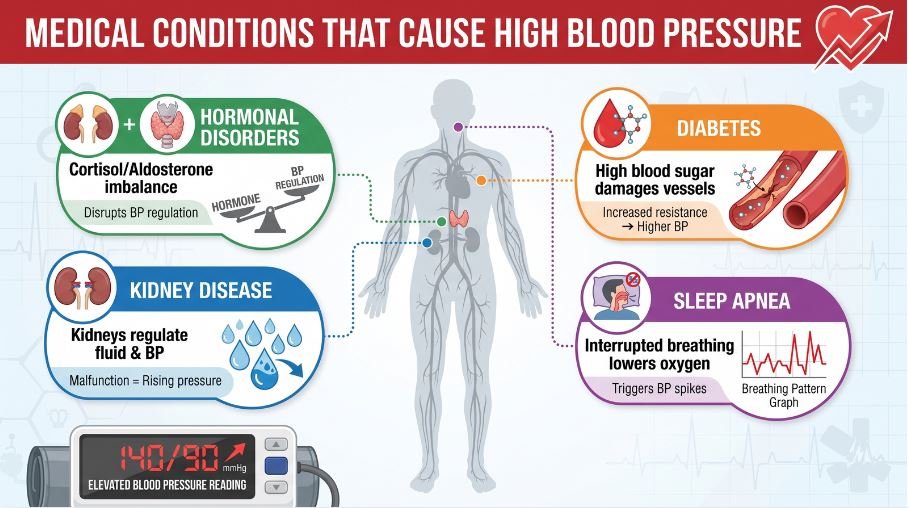
Medical Conditions That Can Cause High Blood Pressure
Some health conditions directly increase blood pressure or make it more difficult to control.
Kidney Disease
The kidneys help regulate fluid balance and blood pressure. When they are not functioning properly, blood pressure can rise.
Diabetes
High blood sugar levels can damage blood vessels over time, leading to increased resistance and higher blood pressure.
Sleep Apnea
Interrupted breathing during sleep can lower oxygen levels and trigger increases in blood pressure.
Hormonal Disorders
Conditions involving hormones such as cortisol or aldosterone can disrupt the body’s ability to regulate blood pressure.
Medications That May Raise Blood Pressure
Certain medications can increase blood pressure as a side effect. These include decongestants, nonsteroidal anti-inflammatory drugs, some antidepressants, and hormonal medications such as birth control.
If you suspect a medication is affecting your blood pressure, it is important to speak with a healthcare provider before making any changes.
The Role of Stress in High Blood Pressure
Stress does not always cause long-term high blood pressure on its own, but it can contribute in several ways.
Short-term stress can cause temporary spikes in blood pressure. Over time, stress may also lead to unhealthy habits such as poor diet, lack of exercise, smoking, or alcohol use, which increase the risk of hypertension.
Genetic and Age-Related Factors
Family History
If high blood pressure runs in your family, you may be more likely to develop it. Genetics can influence how your body regulates blood pressure.
Aging
As you get older, blood vessels naturally lose some of their flexibility. This can increase resistance in the arteries and raise blood pressure over time.
Why High Blood Pressure Often Has No Symptoms
One of the most important things to understand is that high blood pressure usually does not cause noticeable symptoms.
Many people feel completely normal even when their readings are elevated. This is why regular monitoring is essential.
If you are unsure how to interpret your readings, learn what blood pressure numbers mean and how to understand your results.
When Multiple Causes Work Together
In most cases, high blood pressure is not caused by a single factor.
Instead, it develops from a combination of lifestyle habits, underlying conditions, genetic predisposition, and age-related changes.
This is why managing blood pressure often requires addressing several areas at once.
Once you understand the causes, the next step is learning how to lower high blood pressure safely and effectively.
Key Takeaways
High blood pressure is usually caused by a combination of factors rather than a single issue
Lifestyle habits such as diet, activity level, and smoking play a major role
Medical conditions and medications can also contribute
Genetics and aging increase overall risk
High blood pressure often has no symptoms, making regular monitoring important
Frequently Asked Questions
What is the most common cause of high blood pressure?
The most common cause is primary hypertension, which develops over time due to a mix of lifestyle factors, aging, and genetics.
Can stress cause high blood pressure?
Stress can cause temporary increases in blood pressure and may contribute to long-term hypertension through unhealthy habits.
Can high blood pressure be reversed?
In many cases, blood pressure can be lowered through lifestyle changes such as improved diet, regular exercise, and weight management. Some people may also need medication.
How do I know if I have high blood pressure?
The only way to know for sure is to measure it. Many people have no symptoms, so regular checks are important.