
Many people know that eating too much sodium can raise blood pressure, but few realize how much sodium they consume each day. The majority of sodium in the typical diet does not come from the salt shaker. Instead, it comes from processed foods, restaurant meals, canned products, and packaged snacks.
If you have high blood pressure or want to protect your heart health, reducing sodium intake is one of the most effective dietary changes you can make. Even modest reductions can help lower blood pressure and reduce strain on your heart and blood vessels.
In this guide, you’ll learn why sodium matters, how much is too much, which foods contribute the most sodium, and practical ways to cut back without sacrificing flavor.
Quick Answer
To reduce sodium in your diet, eat fewer processed foods, choose low-sodium versions of packaged products, cook more meals at home, read nutrition labels carefully, and flavor foods with herbs and spices instead of salt. Most adults should aim to stay below 2,300 mg of sodium per day, while people with high blood pressure may benefit from even lower intake levels.
What Is Sodium?
Sodium is a mineral that helps regulate fluid balance, muscle function, and nerve signaling. Your body needs some sodium to function properly, but most people consume far more than necessary.
When sodium levels become too high, your body retains extra water. This increases the volume of blood circulating through your blood vessels, which can raise blood pressure.
Over time, elevated blood pressure can increase the risk of heart disease, stroke, kidney disease, and other serious health problems.
If you’re unfamiliar with how blood pressure works, consider reading our guide on blood pressure numbers explained.
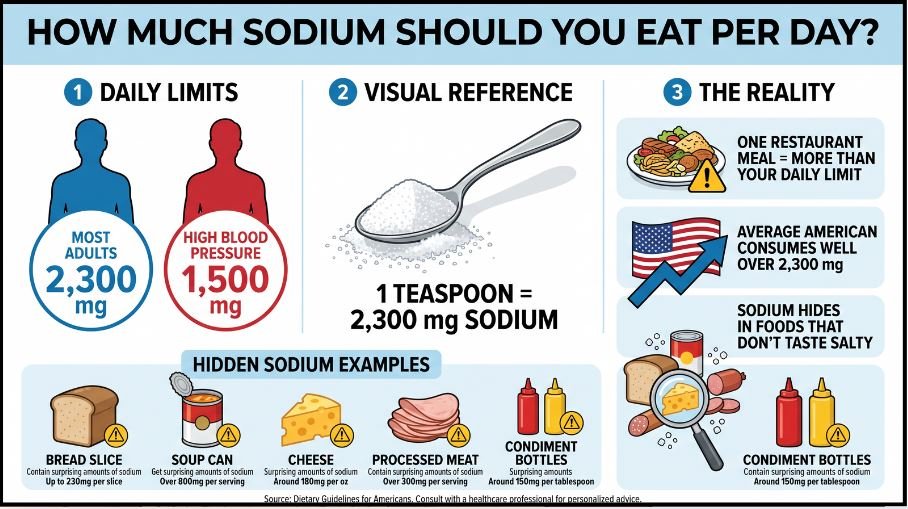
How Much Sodium Should You Eat Per Day?
Current dietary guidelines recommend that most adults consume no more than 2,300 milligrams of sodium per day.
For people with high blood pressure, many healthcare professionals recommend limiting sodium intake to approximately 1,500 mg per day when possible.
To put that into perspective:
- 2,300 mg of sodium equals about one teaspoon of salt
- Many restaurant meals contain more than an entire day’s worth of sodium
- The average American consumes well over the recommended limit
The challenge is that sodium often hides in foods that do not taste particularly salty.
Why Reducing Sodium Can Help Lower Blood Pressure
Excess sodium causes your body to hold onto water. The additional fluid increases pressure inside your arteries and blood vessels.
For many people, lowering sodium intake can lead to measurable reductions in blood pressure within a matter of weeks.
Some individuals are particularly “salt sensitive,” meaning their blood pressure responds strongly to changes in sodium intake. Older adults, people with hypertension, and those with kidney disease often fall into this category.
Reducing sodium is one of several proven lifestyle changes discussed in our guide on how to lower blood pressure naturally.
The Biggest Sources of Sodium in the Modern Diet
Many people assume that table salt is the main problem. In reality, most dietary sodium comes from processed and prepared foods.
Common high-sodium foods include:
- Processed meats such as bacon, sausage, hot dogs, and deli meats
- Canned soups
- Frozen dinners
- Pizza
- Fast food meals
- Packaged snacks
- Crackers and pretzels
- Restaurant foods
- Cheese
- Bread and rolls
- Bottled sauces and salad dressings
Even foods that seem healthy can contain surprising amounts of sodium.
For example, a single serving of canned soup may contain several hundred milligrams of sodium, while some restaurant entrées exceed 2,000 mg.
How to Read Sodium Labels
One of the easiest ways to reduce sodium is to become familiar with nutrition labels.
When reviewing packaged foods:
- Compare similar products and choose the lower-sodium option
- Look for products labeled “low sodium” or “no salt added”
- Check serving sizes carefully
- Consider total daily sodium intake rather than individual foods
As a general rule:
- 140 mg or less per serving is considered low sodium
- 400 mg or more per serving is considered high sodium
Many people are surprised to discover how quickly sodium adds up throughout the day.
10 Practical Ways to Reduce Sodium in Your Diet
1. Cook More Meals at Home
Preparing food yourself gives you complete control over ingredients.
Restaurant meals often contain significantly more sodium than home-cooked meals.
2. Use Herbs and Spices Instead of Salt
Flavor foods with:
- Garlic
- Onion
- Black pepper
- Basil
- Oregano
- Rosemary
- Thyme
- Lemon juice
- Vinegar
Many people find they do not miss the extra salt after a few weeks.
3. Choose Fresh Foods More Often
Fresh fruits, vegetables, lean meats, and whole grains naturally contain very little sodium.
Building meals around these foods can dramatically reduce overall sodium intake.
4. Limit Processed Foods
Packaged convenience foods are among the largest contributors of sodium.
The less processed a food is, the less sodium it typically contains.
5. Rinse Canned Foods
Rinsing canned beans and vegetables can remove a significant portion of the added sodium.
Whenever possible, choose no-salt-added varieties.
6. Be Careful With Condiments
Common condiments can contain substantial sodium, including:
- Soy sauce
- Ketchup
- Barbecue sauce
- Salad dressing
- Pickles
Use smaller amounts or seek lower-sodium alternatives.
7. Reduce Processed Meats
Deli meats, bacon, sausage, and cured meats are among the highest-sodium foods in the average diet.
Replacing them with fresh poultry, fish, or lean cuts of meat can make a meaningful difference.
8. Choose Low-Sodium Snacks
Instead of salty snacks, consider:
- Fresh fruit
- Unsalted nuts
- Raw vegetables
- Plain popcorn
- Greek yogurt
9. Ask for Modifications at Restaurants
Many restaurants can prepare dishes without added salt upon request.
You can also ask for sauces and dressings on the side.
10. Make Gradual Changes
Your taste buds adapt over time.
Gradually reducing sodium often feels easier and more sustainable than making dramatic changes overnight.
Does Sea Salt Have Less Sodium Than Table Salt?
This is a common misconception.
Sea salt and table salt contain similar amounts of sodium by weight.
While texture and flavor may differ, switching to sea salt alone is unlikely to lower your sodium intake significantly.
The key is reducing total sodium consumption, regardless of the type of salt used.
What About Salt Substitutes?
Some salt substitutes replace sodium with potassium.
These products may help some individuals reduce sodium intake, but they are not appropriate for everyone.
People with kidney disease or those taking certain medications should consult a healthcare provider before using salt substitutes regularly.
How Long Does It Take to See Results?
Some people notice blood pressure improvements within a few weeks of reducing sodium intake.
The exact response varies depending on factors such as:
- Current sodium intake
- Age
- Overall diet quality
- Weight
- Activity level
- Existing blood pressure levels
Reducing sodium works best when combined with other healthy habits such as regular exercise, maintaining a healthy weight, limiting alcohol, and managing stress.
If stress is contributing to elevated readings, our article on anxiety and blood pressure explains the connection in more detail.
Common Mistakes People Make
Assuming Food Is Low in Sodium Because It Doesn’t Taste Salty
Many packaged foods contain large amounts of hidden sodium.
Focusing Only on the Salt Shaker
Most sodium comes from processed foods, not added table salt.
Ignoring Serving Sizes
A product may appear low in sodium until you realize the package contains multiple servings.
Expecting Immediate Perfection
Reducing sodium is a long-term habit, not a one-day project.
Small improvements add up over time.
When Should You Be More Concerned About Sodium Intake?
Reducing sodium is especially important if you:
- Have high blood pressure
- Have kidney disease
- Are over age 50
- Have a family history of cardiovascular disease
- Have been told you are salt sensitive
If you already have hypertension, understanding what is considered high blood pressure can help you better evaluate your risk and treatment goals.
Frequently Asked Questions
How much sodium should someone with high blood pressure consume?
Many experts recommend aiming for around 1,500 mg per day, though individual recommendations vary. Consult your healthcare provider for guidance based on your specific situation.
Is Himalayan pink salt healthier than regular salt?
Himalayan pink salt contains trace minerals but still contains sodium. It should be used in moderation just like regular table salt.
Can reducing sodium lower blood pressure without medication?
For some people, reducing sodium can significantly lower blood pressure. Others may still require medication, but dietary improvements often enhance treatment effectiveness.
What foods are naturally low in sodium?
Fresh fruits, vegetables, lean meats, fish, beans, oats, rice, and many whole foods are naturally low in sodium.
Is sodium the same as salt?
Not exactly. Salt is made up of sodium and chloride. Nutrition labels list sodium content because sodium is the component most closely linked to blood pressure.
Final Thoughts
Reducing sodium is one of the simplest and most effective steps you can take to support healthy blood pressure. The good news is that you do not have to eliminate salt completely or follow a restrictive diet to see benefits.
Start by making a few practical changes, such as choosing less processed food, reading nutrition labels, and cooking more meals at home. Over time, these habits can help lower blood pressure, improve heart health, and reduce your risk of serious complications.
The goal is progress, not perfection. Even small reductions in sodium can make a meaningful difference.