
If you have high blood pressure, you may wonder whether a supplement could help lower your numbers or reduce your reliance on medication.
Some supplements may help, but the effects are usually modest, and the evidence varies considerably from one product to another. Supplements are also not substitutes for proven approaches such as a heart-healthy diet, regular physical activity, maintaining a healthy weight, reducing excess sodium, and taking blood pressure medication when it is needed.
The most useful way to think about blood pressure supplements is as possible additions to an overall treatment plan, not as standalone solutions.
Quick Answer
Some blood pressure supplements may modestly lower blood pressure in certain people, but they do not work equally well for everyone.
Magnesium, omega-3 fatty acids, beetroot or dietary nitrates, flaxseed, hibiscus, garlic, CoQ10, and potassium have all been studied for their potential effects on blood pressure. However, the quality and consistency of the evidence differs considerably among them.
Supplements should not replace prescribed blood pressure medication when medication is needed. They are generally most useful when combined with proven lifestyle measures and appropriate medical care.
For a detailed comparison of individual options, see Best Supplements for High Blood Pressure.
Why People Consider Blood Pressure Supplements
Many people with high blood pressure are interested in approaches that go beyond medication alone.
Some want to improve their numbers through diet and lifestyle. Others are already taking medication but are interested in additional ways to support their cardiovascular health.
That interest is understandable. High blood pressure often requires long-term management, and small improvements from several different strategies can add up.
But supplements are only one possible part of that strategy.
Changes such as exercising regularly, eating a heart-healthy diet, reducing excess sodium, improving sleep, maintaining a healthy weight, and limiting alcohol have much stronger evidence behind them than most supplements.
If you are looking for a broader approach, How to Lower Blood Pressure explains the lifestyle changes that tend to make the biggest difference.
How Could Supplements Affect Blood Pressure?
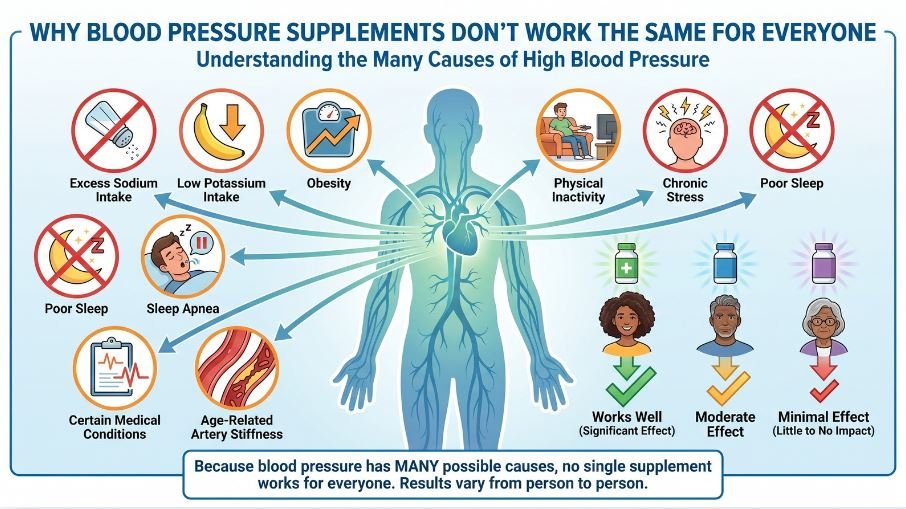
Blood pressure is influenced by many different processes in the body.
Some supplements may affect blood pressure by helping blood vessels relax. Others may influence sodium and potassium balance, inflammation, nitric oxide production, or other mechanisms involved in circulation.
But high blood pressure itself can develop for many different reasons, including:
- Excess sodium intake
- Low potassium intake
- Excess body weight
- Physical inactivity
- Chronic stress
- Poor sleep
- Sleep apnea
- Age-related changes in the arteries
- Kidney disease
- Certain medications
- Genetics
Because the causes vary, it makes sense that no single supplement works equally well for everyone.
A supplement that helps one person may have little effect on someone else.
What Does the Research Say About Blood Pressure Supplements?
The overall evidence suggests that some supplements can produce small reductions in blood pressure.
The key word is small.
In clinical trials, the average improvement from many supplements is often measured in only a few millimeters of mercury, or mmHg.
That does not necessarily make the effect meaningless. Even modest improvements can be useful when they are combined with other effective blood pressure strategies.
But it does mean supplement claims should be kept in perspective.
A product that promises to “normalize” high blood pressure or replace medication is making a much stronger claim than the research generally supports.
Which Supplements Have Been Studied?
A number of supplements and dietary additions have been investigated for blood pressure.
Among the better-known examples are:
Magnesium
Magnesium plays a role in muscle function, nerve function, and blood vessel regulation.
Research suggests magnesium supplementation may produce a modest reduction in blood pressure in some people, particularly when magnesium intake is low.
Omega-3 Fatty Acids
Omega-3 fatty acids, particularly EPA and DHA found in fish and fish oil, have been extensively studied for cardiovascular health.
Some research suggests they can modestly reduce blood pressure, particularly in people who already have hypertension.
Beetroot and Dietary Nitrates
Beetroot is naturally rich in nitrate, which the body can convert into nitric oxide.
Nitric oxide helps blood vessels relax and widen, and some studies have found reductions in systolic blood pressure after consuming nitrate-rich beetroot preparations.
Flaxseed
Flaxseed contains fiber, healthy fats, and plant compounds called lignans.
Clinical trials have found modest blood pressure reductions in some participants, although studies have used different forms and amounts of flaxseed.
Hibiscus
Hibiscus is commonly consumed as an herbal tea.
Several studies have reported reductions in blood pressure, but differences in study quality and preparation make it difficult to predict how much benefit an individual person might receive.
Garlic and CoQ10
Garlic preparations and CoQ10 have also been studied for blood pressure.
Some trials have reported benefits, while others have been less convincing. The overall evidence is therefore less consistent.
Potassium
Potassium is particularly important because it helps balance some of the effects of sodium and supports normal blood vessel function.
However, getting more potassium through food is not the same as taking a potassium supplement.
Potassium supplements can be dangerous for people with kidney disease or those taking certain medications, so they deserve greater caution than ordinary nutritional supplements.
If you want a closer comparison of the evidence behind these individual options, including which appear most promising and which require more caution, see Best Supplements for High Blood Pressure.
Why Some Blood Pressure Supplements May Not Work
Even when an ingredient has been studied, the supplement you buy may not produce the same results seen in research.
There are several reasons for this.
The Dose May Be Different
A commercial supplement may contain much less of an active ingredient than researchers used in clinical trials.
More is not automatically better either. Higher doses can increase side effects or interactions.
The Form May Be Different
This is especially important with products such as garlic, beetroot, magnesium, and omega-3 supplements.
Different forms of the same ingredient may not behave identically in the body.
The Product May Contain a Proprietary Blend
Some supplements combine numerous ingredients but do not clearly disclose how much of each ingredient is present.
That makes it difficult to know whether the product contains amounts similar to those studied in research.
Supplement Quality Can Vary
Dietary supplements do not all undergo the same type of testing required for prescription medications.
Purity, potency, and consistency can differ between manufacturers.
When evaluating a supplement, look beyond marketing claims and pay attention to:
- The active ingredients
- The amount of each ingredient
- The form of the ingredient
- Third-party quality testing
- Research supporting the ingredient
- Safety information
- Possible medication interactions
Can Supplements Replace Blood Pressure Medication?
For most people who need medication to control hypertension, the answer is no.
Blood pressure medications have been extensively studied and are prescribed because controlling hypertension reduces the risk of serious complications such as heart attack, stroke, heart failure, and kidney disease.
Dietary supplements have not demonstrated comparable effects.
Some people may be able to improve their blood pressure significantly through diet, exercise, weight loss, or other lifestyle changes. But decisions about reducing or stopping medication should be made with the healthcare professional managing your blood pressure.
Never stop taking prescribed blood pressure medication simply because you have started taking a supplement.
Are Lifestyle Changes More Effective Than Supplements?
In most cases, lifestyle changes deserve more attention than supplements.
The most effective strategies include:
- Following a heart-healthy eating pattern
- Reducing excess sodium
- Getting regular physical activity
- Maintaining a healthy weight
- Limiting alcohol
- Managing stress
- Getting enough quality sleep
- Not smoking
For example, reducing sodium intake can have a meaningful effect on blood pressure, particularly in people who are salt-sensitive. See How to Reduce Sodium in Your Diet for practical ways to cut back without making food bland.
Regular physical activity is another proven strategy. Even something as accessible as walking can help. Is Walking Enough to Lower Blood Pressure? explains how walking fits into a blood pressure exercise plan.
Supplements can sometimes complement these approaches, but they should not distract from the habits that have the strongest evidence behind them.
Can Blood Pressure Supplements Be Dangerous?
Yes.
Supplements can cause side effects and interact with medications.
Some can lower blood pressure further when combined with prescription drugs, potentially causing dizziness, weakness, or blood pressure that becomes too low.
Others may affect kidney function, potassium levels, or blood clotting.
There are also supplements and herbal products that may actually raise blood pressure rather than lower it.
This is why the word “natural” should never be assumed to mean “safe.”
Extra caution is appropriate if you:
- Take blood pressure medication
- Have kidney disease
- Have heart disease
- Take anticoagulants or antiplatelet medications
- Take several prescription medications
- Are considering a potassium supplement
- Take multiple dietary supplements
How Can You Tell Whether a Supplement Is Helping?
Do not rely on how you feel.
High blood pressure often causes no noticeable symptoms, so the best way to determine whether something is affecting your blood pressure is to measure it properly.
If you start a supplement with your healthcare provider’s approval, keep track of your readings under similar conditions and look for patterns over time.
A single unusually high or low measurement does not necessarily tell you whether the supplement is working.
If you are unsure how to interpret your readings, Blood Pressure Numbers Explained explains what systolic and diastolic numbers mean and how blood pressure categories are defined.
When to Talk With Your Doctor
Talk with your healthcare provider or pharmacist before starting a supplement for blood pressure if you:
- Take prescription blood pressure medication
- Have kidney disease
- Have heart disease
- Take several medications
- Take anticoagulants
- Are considering potassium supplementation
- Have concerns about possible drug interactions
It is also important to remember that supplements are not an appropriate response to dangerously high blood pressure.
If you have a severely elevated reading or concerning symptoms, see When Is Blood Pressure Dangerous? for guidance on when high readings may require urgent medical attention.
Final Thoughts
Blood pressure supplements are not worthless, but they are also not miracle treatments.
Research suggests that several supplements and dietary additions may produce modest improvements in blood pressure. The evidence is stronger for some than for others, and individual responses can vary considerably.
The most useful approach is to view supplements as one possible part of a larger blood pressure management plan.
That plan should still emphasize a heart-healthy diet, regular physical activity, appropriate sodium intake, healthy weight, good sleep, regular blood pressure monitoring, and medication when it is medically necessary.
If you are interested in trying a supplement, focus on evidence rather than advertising, choose reputable products, and discuss the supplement with your healthcare provider or pharmacist before adding it to your routine.
Frequently Asked Questions
Do blood pressure supplements really work?
Some supplements may modestly lower blood pressure in certain people, but results vary and the average effect is usually small. Supplements should be viewed as possible additions to proven lifestyle changes and medical treatment rather than standalone treatments for hypertension.
How much can supplements lower blood pressure?
The amount varies widely depending on the supplement, dose, individual, and starting blood pressure. In many clinical trials, average reductions are measured in only a few mmHg. Some people may experience a larger response, while others may experience little or no change.
How long does it take for blood pressure supplements to work?
There is no standard time frame. Clinical studies commonly evaluate supplements over several weeks or months. Supplements should not be expected to produce an immediate reduction in a dangerously high blood pressure reading.
Are blood pressure supplements safe?
Many supplements can be used safely by some people, but they can still cause side effects or interact with prescription medications. People with kidney disease, heart disease, or those taking multiple medications should be particularly cautious.
Can I take supplements with blood pressure medication?
Sometimes, but check with your healthcare provider or pharmacist first. Certain supplements can increase the effects of blood pressure medication, alter potassium levels, affect blood clotting, or interact with other prescriptions.
Are natural ways to lower blood pressure better than supplements?
Lifestyle changes generally have stronger evidence than individual supplements. Regular exercise, a heart-healthy diet, reducing excess sodium, maintaining a healthy weight, limiting alcohol, managing stress, and getting adequate sleep should usually form the foundation of a blood pressure management plan.