
What you eat can make a meaningful difference in your blood pressure, but you do not need to search for one special food that will bring your numbers down.
The strongest approach is an overall eating pattern built around vegetables, fruits, whole grains, beans, nuts, low-fat dairy products, fish, and other minimally processed foods. These foods provide nutrients such as potassium, calcium, magnesium, fiber, and unsaturated fats while helping you eat less sodium and saturated fat.
That is also the basic idea behind the DASH eating plan, one of the most widely recommended dietary approaches for people with high blood pressure.
The foods below can all fit into a blood-pressure-friendly diet and give you practical places to start.
Quick Answer: What Are the Best Foods for High Blood Pressure?
Some of the best foods for high blood pressure include leafy green vegetables, berries, beets, oats, bananas, fatty fish, garlic, low-fat dairy products, nuts, seeds, and other nutrient-rich whole foods.
No single food lowers blood pressure by itself. The greatest benefit comes from regularly eating a variety of these foods as part of a heart-healthy diet while limiting excess sodium, highly processed foods, saturated fat, and added sugar.
Key Takeaways
- The best diet for high blood pressure emphasizes vegetables, fruits, whole grains, beans, nuts, fish, and low-fat dairy products.
- Potassium-rich foods can be especially helpful because potassium helps counter some of sodium’s effects on blood pressure.
- Calcium, magnesium, fiber, unsaturated fats, and other nutrients also contribute to a heart-healthy eating pattern.
- The DASH diet combines many of these foods into an eating plan specifically designed to support healthy blood pressure.
- Reducing excess sodium is just as important as adding healthier foods.
- No individual food should be considered a substitute for prescribed blood pressure medication or medical care.
Why Food Matters for Blood Pressure
Blood pressure is influenced by many factors, including genetics, age, body weight, physical activity, sleep, stress, medications, alcohol use, and what you eat.
Diet is particularly important because it can affect sodium and fluid balance, blood vessel function, body weight, and overall cardiovascular health.
Current hypertension guidelines recommend a heart-healthy eating pattern such as DASH, reducing sodium, and getting adequate dietary potassium as part of preventing and managing high blood pressure.
If you are looking for a broader strategy that goes beyond food, see How to Lower Blood Pressure.
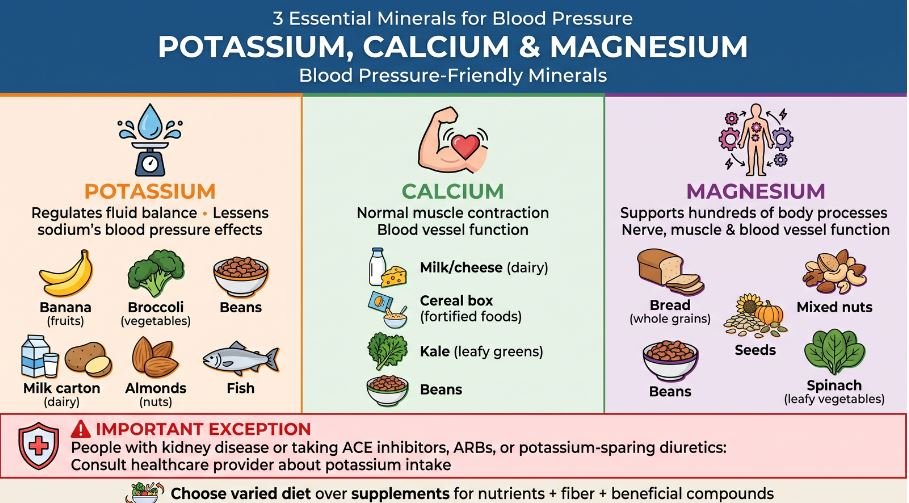
Potassium, Calcium, and Magnesium
Three minerals receive particular attention in blood-pressure-friendly diets: potassium, calcium, and magnesium.
Potassium helps regulate fluid balance and can lessen some of sodium’s effects on blood pressure. Fruits, vegetables, beans, dairy products, potatoes, nuts, and fish are among the many dietary sources.
Calcium is involved in normal muscle contraction and blood vessel function. Dairy products, fortified foods, leafy greens, and some beans provide calcium.
Magnesium participates in hundreds of processes throughout the body, including those involved in normal nerve, muscle, and blood vessel function. Whole grains, nuts, seeds, beans, and leafy vegetables are good sources.
Rather than trying to obtain large amounts of individual nutrients from supplements, a varied diet provides these nutrients together with fiber and other beneficial compounds.
There is one important exception to the general advice to eat more potassium-rich foods. People with kidney disease and those taking certain medications, including some ACE inhibitors, ARBs, and potassium-sparing diuretics, can develop dangerously high potassium levels. If that applies to you, ask your healthcare provider how much potassium is appropriate for you.
How the DASH Diet Uses Food to Lower Blood Pressure
Many of the foods on this list are central to the DASH diet, which stands for Dietary Approaches to Stop Hypertension.
DASH emphasizes vegetables, fruits, whole grains, low-fat or fat-free dairy products, beans, nuts, fish, poultry, and vegetable oils while limiting sodium, saturated fat, sugar-sweetened beverages, and sweets.
The important point is that DASH does not depend on one “blood pressure superfood.” It combines many beneficial foods into an overall eating pattern.
For a complete explanation of the eating plan, recommended servings, sodium targets, and how to get started, see What Is the DASH Diet?.
1. Leafy Green Vegetables
Leafy greens are an excellent place to start when building a diet for healthier blood pressure.
Vegetables such as spinach, kale, Swiss chard, collard greens, and romaine lettuce provide varying amounts of potassium, magnesium, calcium, fiber, and other nutrients.
Good choices include:
- Spinach
- Kale
- Swiss chard
- Collard greens
- Romaine lettuce
- Arugula
- Mustard greens
There is no need to identify one leafy green as “best.” Eating a variety is more important.
Fresh and frozen greens are both good choices. If you buy canned greens, compare labels and look for lower-sodium or no-salt-added varieties.
Leafy greens are also easy to work into meals. Add spinach to scrambled eggs, put greens on sandwiches, mix them into soups, or serve a salad with dinner.
2. Berries
Blueberries, strawberries, raspberries, and blackberries are easy ways to add fruit to a blood-pressure-friendly diet.
Berries provide fiber, vitamins, and plant compounds called flavonoids. Anthocyanins, the pigments responsible for the red, blue, and purple colors of many berries, have been studied for their possible effects on cardiovascular and blood vessel health.
That does not mean eating blueberries will immediately lower your blood pressure. Think of berries as one part of an overall diet that supports cardiovascular health.
Fresh and frozen berries are both good options.
Try adding them to:
- Oatmeal
- Plain yogurt
- Whole-grain cereal
- Smoothies
- Salads
Choosing whole berries rather than sweetened berry products also helps avoid unnecessary added sugar.
3. Beets
Beets stand out because they are naturally rich in dietary nitrate.
The body can convert dietary nitrate into nitric oxide, which helps blood vessels relax and widen. Research has found that beetroot and beetroot juice can produce modest reductions in blood pressure in some people.
You can get dietary nitrates from whole beets as well as other vegetables, including leafy greens.
Try beets roasted, steamed, added to salads, or blended into a smoothie.
Beet juice has also been studied, but it is more concentrated than whole beets and lacks much of the fiber of the whole vegetable. It should be viewed as a food option rather than a treatment for hypertension.
4. Oats
Oats are a whole grain rich in soluble fiber, particularly a type called beta-glucan.
Soluble fiber is well known for helping lower LDL cholesterol, and diets rich in whole grains and fiber are associated with better cardiovascular health. Some research also suggests that regular oat and beta-glucan consumption may contribute to modest improvements in blood pressure.
Oats are also naturally low in sodium when they are prepared without added salt.
Good choices include:
- Old-fashioned rolled oats
- Steel-cut oats
- Plain quick oats
Be more cautious with flavored instant oatmeal packets. Some contain substantial amounts of added sugar and sodium.
For a simple breakfast, combine plain oatmeal with berries, banana slices, ground flaxseed, or a small handful of unsalted nuts.
5. Bananas
Bananas are convenient, affordable, and naturally rich in potassium.
Potassium helps the body regulate sodium and supports normal blood vessel function, which is one reason potassium-rich fruits and vegetables are emphasized in blood-pressure-friendly eating patterns.
But bananas are far from the only source.
Other potassium-rich foods include potatoes, sweet potatoes, beans, lentils, oranges, tomatoes, yogurt, leafy greens, and certain fish.
That variety matters. Rather than relying on a banana every day to “get your potassium,” try to include several potassium-containing foods throughout your diet.
If you have kidney disease or take medication that can raise potassium levels, talk with your healthcare provider before intentionally increasing your potassium intake.
6. Fatty Fish
Fatty fish provides protein along with the omega-3 fatty acids EPA and DHA.
These fats have several cardiovascular effects, and regularly eating fish is associated with heart-health benefits. Omega-3 intake may also produce modest reductions in blood pressure, particularly at adequate dietary intakes.
Good choices include:
- Salmon
- Sardines
- Trout
- Herring
- Atlantic mackerel
Baking, grilling, broiling, or roasting fish generally makes it easier to keep sodium and saturated fat under control than breading and deep-frying it.
Canned salmon and sardines can be convenient and affordable choices. Because sodium varies substantially among products, compare labels when shopping.
Fish also differs in mercury content. Salmon, sardines, herring, trout, and Atlantic mackerel are generally lower-mercury choices, while certain large predatory fish, including king mackerel and swordfish, contain much higher mercury levels.
7. Garlic
Garlic is useful in a blood-pressure-friendly diet for a simple reason: it adds a great deal of flavor without adding sodium.
Garlic also contains sulfur compounds that have attracted research interest for possible cardiovascular effects. Studies of garlic preparations have reported reductions in blood pressure in some people with hypertension, but results vary and much of this research has involved concentrated garlic supplements rather than ordinary amounts used in cooking.
For that reason, it is better to think of garlic as a flavorful part of a healthy diet rather than a treatment for high blood pressure.
Use fresh garlic to flavor vegetables, fish, beans, soups, sauces, and whole grains.
Garlic powder can also be useful, but do not confuse it with garlic salt, which contains added sodium.
8. Low-Fat or Fat-Free Dairy Products
Low-fat and fat-free dairy products are included in the DASH eating plan because they provide calcium and protein without as much saturated fat as many full-fat alternatives.
Good choices include:
- Plain low-fat yogurt
- Fat-free or low-fat milk
- Low-fat kefir
- Lower-sodium reduced-fat cheese
Plain yogurt is particularly versatile. Add fruit and nuts for breakfast, use it in smoothies, or substitute it for higher-fat ingredients in some recipes.
One product that deserves extra attention is cottage cheese. Even low-fat cottage cheese can contain a substantial amount of sodium, so compare labels and look for lower-sodium varieties.
If you do not consume dairy, fortified soy milk and other fortified plant beverages can provide calcium. Check the label because protein, calcium, added sugar, and sodium vary considerably among products.
9. Nuts and Seeds
Nuts and seeds provide magnesium, fiber, unsaturated fats, plant protein, and, depending on the variety, potassium and other nutrients.
Good choices include:
- Walnuts
- Almonds
- Pistachios
- Pumpkin seeds
- Sunflower seeds
- Flaxseed
- Chia seeds
Walnuts and flaxseed also provide alpha-linolenic acid, or ALA, a plant-based omega-3 fatty acid.
Choose unsalted or lightly salted varieties when possible. A food that is naturally heart healthy can become a significant source of sodium when heavily salted.
Because nuts and seeds are calorie-dense, portions matter, particularly if weight management is part of your blood pressure plan.
Ground flaxseed is easier for the body to digest than whole flaxseed and can be added to oatmeal, yogurt, cereal, or smoothies.
10. Dark Chocolate
Dark chocolate may have a place in a heart-healthy diet, but it deserves more caution than vegetables, fruits, whole grains, or fish.
Cocoa contains flavanols that can support nitric oxide production and blood vessel function. Clinical studies suggest cocoa products can produce small reductions in blood pressure in some people.
However, commercial dark chocolate also contains calories and often added sugar and saturated fat. Cocoa percentage alone does not guarantee that a chocolate bar contains a particular amount of beneficial flavanols because processing methods vary.
If you enjoy dark chocolate, choose a product with a high cocoa content and keep the portion modest.
Think of dark chocolate as an occasional addition to an otherwise healthy diet, not as a food you need to eat every day to lower your blood pressure.
What About Foods That Raise Blood Pressure?
Knowing what to eat more often is only part of the picture.
For many people with high blood pressure, reducing sodium is one of the most useful dietary changes they can make.
Much of the sodium in the typical diet comes from packaged, prepared, and restaurant foods rather than salt added at the table.
Common high-sodium foods can include:
- Deli and processed meats
- Canned soups
- Pizza
- Frozen meals
- Salty snacks
- Sauces and condiments
- Some breads and baked goods
- Restaurant and fast foods
Reading Nutrition Facts labels and comparing similar products can reveal surprisingly large differences in sodium.
If sodium is one of the biggest challenges in your diet, see How to Reduce Sodium in Your Diet for practical ways to cut back without making your meals bland.
A Simple Way to Build a Blood-Pressure-Friendly Plate
You do not need to eat all 10 foods on this list every day.
A more useful goal is to build meals around several broad food groups.
For example, dinner might include baked salmon, a whole grain, and two vegetables. Breakfast could be oatmeal topped with berries and walnuts. Lunch could combine leafy greens, beans, vegetables, and a piece of fruit.
A snack might be plain yogurt with berries or an apple with unsalted nuts.
This approach naturally increases vegetables, fruits, fiber, minerals, and unsaturated fats while leaving less room for highly processed foods.
7 Simple Food Changes You Can Make This Week
You do not need to overhaul your diet overnight. Start with changes you can realistically maintain.
Day 1: Replace a sugary breakfast cereal with plain oatmeal topped with berries.
Day 2: Add a leafy green vegetable to lunch or dinner.
Day 3: Replace a salty snack with a small portion of unsalted nuts and a piece of fruit.
Day 4: Use garlic, herbs, spices, lemon, or vinegar to flavor dinner instead of automatically reaching for the salt shaker.
Day 5: Have fish for dinner and serve it with vegetables and a whole grain.
Day 6: Replace a dessert or sweet snack with plain low-fat yogurt and fruit.
Day 7: Check the sodium content of the packaged foods you eat most often and compare them with lower-sodium alternatives.
Once one change becomes routine, add another.
Dietary changes work best when they become habits rather than short-term restrictions.
Regular physical activity can complement those changes. If walking is your preferred form of exercise, see Is Walking Enough to Lower Blood Pressure? for a closer look at how it can fit into a blood pressure management plan.
How to Know Whether Dietary Changes Are Helping
High blood pressure usually does not produce symptoms you can reliably use to judge whether your diet is working.
You need actual blood pressure readings.
Measure your blood pressure under consistent conditions and pay attention to the trend rather than reacting to a single reading. Blood pressure naturally changes throughout the day and can be affected by activity, stress, caffeine, sleep, meals, and other factors.
If your readings seem unpredictable, Why Blood Pressure Changes Throughout the Day explains which fluctuations can be normal and when changes may deserve more attention.
Diet also does not replace medication when medication is indicated. Current hypertension guidelines recommend medication in addition to lifestyle changes for some people based on their blood pressure level and overall cardiovascular risk.
If you take blood pressure medication, do not stop it or change the dose because your readings improve without talking with your healthcare provider.
Frequently Asked Questions
What Is the Single Best Food for High Blood Pressure?
There is no single best food for high blood pressure.
Leafy green vegetables, fruits, beans, whole grains, nuts, low-fat dairy products, and fish can all contribute useful nutrients. But the evidence is stronger for healthy dietary patterns, such as DASH, than for relying on one particular food.
The best approach is therefore variety and consistency rather than searching for a single “superfood.”
How Quickly Can Changing Your Diet Lower Blood Pressure?
Some dietary changes can begin affecting blood pressure relatively quickly, but the response varies considerably from person to person.
Research on the DASH eating pattern has demonstrated blood pressure improvements within weeks. Reducing sodium can also lower blood pressure, particularly in people whose blood pressure is more sensitive to sodium.
The important goal is not to find a food that causes a temporary change in a reading. It is to develop an eating pattern that supports healthier blood pressure over the long term.
Can You Lower Blood Pressure With Food Alone?
Sometimes lifestyle changes can be enough to improve mildly elevated blood pressure, particularly when diet is combined with physical activity, weight management when appropriate, limiting alcohol, adequate sleep, and other healthy habits.
But many people with hypertension also need medication.
Whether medication is recommended depends on your blood pressure readings and other health factors, including cardiovascular disease, stroke history, diabetes, chronic kidney disease, and overall cardiovascular risk.
Never stop or reduce prescribed blood pressure medication without discussing it with your healthcare provider.
Is Caffeine Bad for High Blood Pressure?
Caffeine can cause a temporary increase in blood pressure in some people, but individual responses vary.
Regular coffee drinkers may develop some tolerance to caffeine’s short-term blood pressure effects, and coffee does not necessarily need to be eliminated simply because someone has hypertension.
If you are concerned about your response, see Does Caffeine Increase Blood Pressure? for a more detailed explanation.
How Much Sodium Should Someone With High Blood Pressure Eat?
The DASH eating plan uses a sodium limit of 2,300 mg per day, with a 1,500 mg version that can lower blood pressure further.
Current blood pressure guidance also emphasizes reducing sodium and moving toward a lower intake when appropriate.
Your best target may depend on your current diet, blood pressure, medications, kidney function, and other health considerations. If you have hypertension or another medical condition that affects sodium or fluid balance, your healthcare provider can help determine an appropriate goal.
Should I Take Potassium Supplements to Lower My Blood Pressure?
Do not assume that more potassium is always better.
For many people, potassium-rich foods are an excellent part of a heart-healthy diet. But potassium supplements and potassium-containing salt substitutes can be dangerous for people with impaired kidney function or those taking certain medications that raise blood potassium.
If you are considering a potassium supplement or potassium-based salt substitute, talk with your healthcare provider first.
Final Thoughts
The best foods for high blood pressure are not exotic, expensive, or difficult to find.
Vegetables, fruits, whole grains, beans, nuts, seeds, fish, and low-fat dairy products can provide many of the nutrients associated with a heart-healthy eating pattern.
But the most important lesson is that the overall pattern matters more than any individual food.
Eating spinach occasionally will not undo an otherwise high-sodium diet. A banana cannot compensate for routinely eating heavily processed foods. And dark chocolate is not a treatment for hypertension.
Instead, make the foods on this list part of the way you normally eat.
Start with a few manageable changes. Add another vegetable to dinner. Eat fruit with breakfast. Choose unsalted nuts. Have fish more often. Compare sodium levels when buying packaged foods.
Those individual decisions may seem small, but together they can create the kind of eating pattern that supports healthier blood pressure for the long term.