
Normal blood pressure is typically defined as a reading below 120/80, but those numbers only tell part of the story. What do they actually mean, and how do you know if your blood pressure is truly in a healthy range? In this guide, you will learn what normal blood pressure really is, how to understand your numbers, and when it might be time to pay closer attention.
Even small changes in your numbers can make a big difference over time.
Quick Answer
Normal blood pressure is a reading below 120/80 mmHg. The top number (systolic) measures pressure when your heart beats, and the bottom number (diastolic) measures pressure when your heart rests between beats (according to the American Heart Association).
Blood pressure categories are generally defined as:
- Normal: Less than 120/80
- Elevated: 120 to 129 and less than 80
- High (Stage 1): 130 to 139 or 80 to 89
- High (Stage 2): 140 or higher or 90 or higher
Readings below 120/80 are associated with the lowest risk of heart disease and stroke.
What Does 120/80 Actually Mean?
A blood pressure reading of 120/80 mmHg includes two numbers that measure how your heart and arteries are working:
- 120 (systolic): the pressure in your arteries when your heart beats and pushes blood out
- 80 (diastolic): the pressure in your arteries when your heart rests between beats
Together, these numbers show how much force your blood is placing on your artery walls. Lower numbers generally mean less strain on your heart and blood vessels, as long as they stay within a healthy range.
If you want a full breakdown, read our guide: What Do Blood Pressure Numbers Mean
The Normal Blood Pressure Range
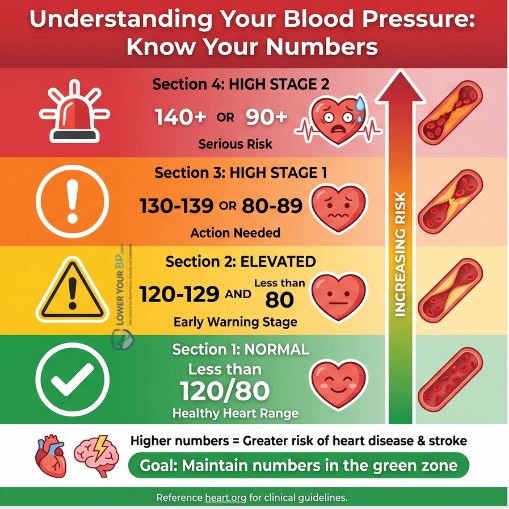
Blood pressure is grouped into categories based on how high your readings are. These ranges help doctors determine your risk level and whether action may be needed.
- Normal: Less than 120/80
- Elevated: 120 to 129 and less than 80
- High (Stage 1): 130 to 139 or 80 to 89
- High (Stage 2): 140 or higher or 90 or higher
These categories are widely used by medical professionals and are based on established clinical guidelines (see: https://www.heart.org).
Each category reflects a different level of strain on your heart and blood vessels. As your numbers move higher, your risk of conditions like heart disease and stroke increases.
The goal is not just to stay out of the high range, but to remain consistently within the normal range over time.
Is Lower Always Better?
Not always.
While lower blood pressure is generally good, numbers that are too low can cause problems such as:
- Dizziness
- Fainting
- Fatigue
Very low blood pressure can reduce blood flow to important organs (see: https://www.mayoclinic.org/diseases-conditions/low-blood-pressure).
The goal is not the lowest number possible, but a stable and healthy range.
Why Normal Blood Pressure Matters
Keeping your blood pressure in the normal range helps:
- Reduce strain on your heart
- Protect your arteries from damage
- Lower your risk of stroke and heart disease (see: https://www.cdc.gov/bloodpressure)
- Support long-term overall health
High blood pressure often has no symptoms, so normal readings are a strong sign that your cardiovascular system is working well.
How to Maintain Normal Blood Pressure
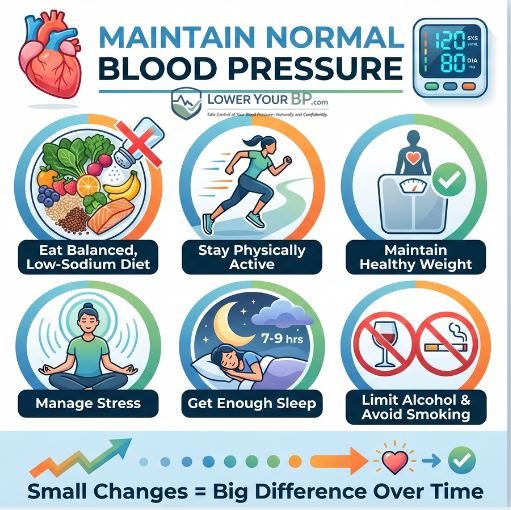
Simple daily habits can help keep your numbers in a healthy range:
- Eat a balanced, low-sodium diet
- Stay physically active
- Maintain a healthy weight
- Manage stress
- Get enough sleep
- Limit alcohol and avoid smoking
Small changes can make a big difference over time.
When to Pay Attention
Even if your blood pressure is normal now, it is important to keep checking it regularly.
Watch for:
- Readings consistently above 120/80
- Gradual increases over time
- Large fluctuations between readings
Catching changes early makes it easier to take action and prevent long-term problems.
Here are answers to some common questions about normal blood pressure:
Frequently Asked Questions About Normal Blood Pressure
Is 120/80 considered normal blood pressure?
Yes. A blood pressure reading of 120/80 mmHg is considered normal. It means your heart is pumping efficiently and your arteries are not under excessive strain.
What is a good blood pressure range by age?
For most adults, a normal blood pressure reading is below 120/80 mmHg, regardless of age. However, your ideal range may vary slightly depending on your overall health and medical history.
Is 110/70 a healthy blood pressure?
Yes. A reading of 110/70 mmHg is considered healthy and falls within the normal blood pressure range, as long as you do not experience symptoms like dizziness or fatigue.
When is blood pressure considered too high?
Blood pressure is considered high if it is consistently 130/80 mmHg or higher. This includes Stage 1 hypertension (130 to 139 or 80 to 89) and Stage 2 hypertension (140 or higher or 90 or higher).
Can blood pressure be too low?
Yes. Blood pressure can be too low if it causes symptoms such as dizziness, fainting, or weakness. Very low readings may reduce blood flow to important organs.
The Bottom Line
Normal blood pressure is below 120/80 mmHg and is one of the clearest signs that your heart and arteries are functioning well. The key is not just knowing your numbers, but understanding what they mean and how they change over time.
By checking your blood pressure regularly and maintaining healthy habits, you can stay in a safe range and reduce your risk of serious health problems in the future.
If you are unsure what your readings mean, start by learning the basics in:
What Do Blood Pressure Numbers Mean